
Feed your Sphynx a high-animal-protein, moisture-forward diet in 2 to 4 measured meals a day, never free-fed.
TL;DR:
- Sphynx cats require a diet high in animal protein, ideally between 30% and 45%, with digestibility and ingredient quality being more important than total percentage.
- Feeding should involve two measured meals per day with precise portions weighed on a scale, and body condition checked weekly for the first month, then monthly.
- Wet food supports hydration and urinary health better than dry kibble, which should be rehydrated and fed alongside high-moisture options.
- Avoid foods containing onions, garlic, chocolate, grapes, or excessive fillers, and monitor for any signs of digestive or skin issues to catch diet problems early.
- Transition food gradually over 10 days to prevent gastrointestinal upset, especially since Sphynx cats are prone to eating sensitivities and reaction to abrupt changes.
Table of Contents
- Sphynx Diet Basics: Protein and Calorie Targets
- How to Portion Meals and Track Body Condition
- Wet, Dry, or Raw: Choosing the Right Food Format
- Foods and Feeding Patterns to Avoid
- Feeding for Skin and Urinary Health
- Adjusting the Diet by Life Stage and Health Status
- Switching Foods Without Upsetting Your Cat's Stomach
- What New Sphynx Owners Typically Receive at Handover
- Sample Daily Routine and Common Pitfalls
- Getting Feeding Support From the Start With a Reputable Breeder
- Sources
Sphynx Diet Basics: Protein and Calorie Targets
A Sphynx's plate should look different from a standard shorthair's. Because these cats lack an insulating coat, they burn extra energy just staying warm, and that changes what "balanced" looks like on a label.
Protein is the anchor. Research on feline nutrition backs a maintenance range between roughly 30–45% protein, with commercial diets running anywhere from 28% to 55%.
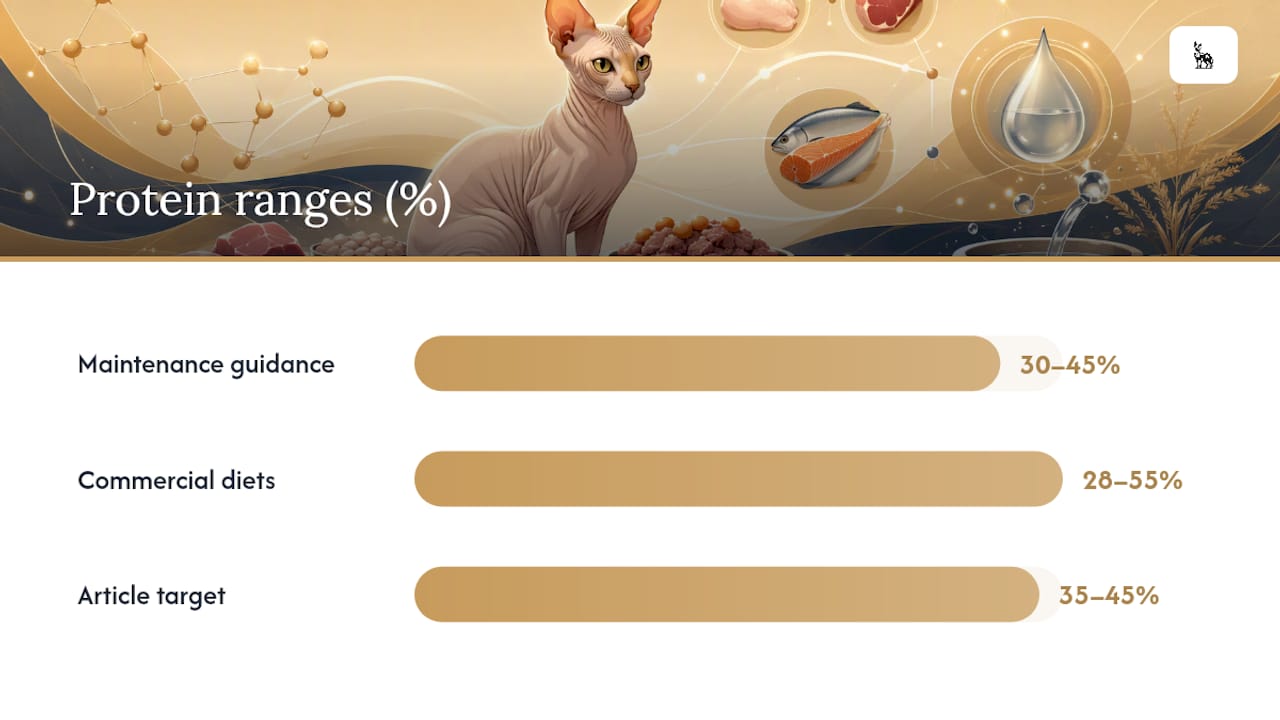
Crude protein percentage on a bag can be misleading, though. A food padded with plant-based fillers can post a high number without delivering the amino acids your cat actually needs. Look past the guaranteed analysis and check the ingredient list instead. Named animal proteins like chicken, turkey, or salmon should lead, since digestibility matters more than the raw percentage.
Fat deserves more attention with this breed than most.
That's a real number to factor into portioning, not a reason to free-feed. Your vet can help translate it into an exact daily calorie target based on your cat's weight and activity level.
How to Portion Meals and Track Body Condition
Skip the bowl that's always full. Structure works better for this breed, and it makes it far easier to catch problems early.
- Feed adults two measured meals a day, or more smaller meals if your cat is very active or tends to beg between meals.
- Feed kittens multiple meals daily to support their higher energy and protein needs.
- Calculate a starting portion from your cat's daily calorie need divided across those meals, then weigh food on a kitchen scale rather than eyeballing a scoop.
- Run your hands along the ribs and waist weekly for the first month. You should feel ribs easily without heavy pressure, and there should be a visible waist behind the ribcage.
- Adjust calories up or down by 5–10% if you're not seeing the body condition you want, then recheck in two weeks.
Once your cat settles into a stable weight, monthly checks are usually enough. Small, portion-controlled meals rather than free-feeding is one of the simplest, most effective habits you can build early.
Pro Tip: Keep a small notebook or phone note logging weight and rib-check results each month. Sphynx weight changes can be subtle under all that loose, wrinkled skin, so a written record catches drift a quick glance might otherwise miss.
Wet, Dry, or Raw: Choosing the Right Food Format
Format matters almost as much as ingredients for this breed, mostly because of hydration.
- Wet or canned food contains high moisture content and supports hydration and urinary health, making it a preferred choice for daily feeding.
- Freeze-dried and raw options can deliver excellent protein quality when sourced and handled safely, but they need added moisture, since freeze-dried products are essentially dehydrated and won't hydrate your cat on their own.
- Dry kibble contains low moisture and is convenient and shelf-stable; if regularly fed, consider rehydrating it and select high-protein, low-carbohydrate formulas avoiding excessive fillers.
Wet food's higher moisture content dilutes urine and lowers the concentration of minerals that can form crystals. This is a meaningful advantage for a breed prone to skin and urinary sensitivity.
Whatever format you land on, run every bag or can through the same checklist. A named meat should be the first ingredient, not "meat meal" or "animal by-product." The label needs an AAFCO life-stage statement. Taurine should appear explicitly rather than being assumed. Fillers like corn gluten or excessive plant proteins should be minimal or absent. A food that fails two or more of those checks is worth skipping, no matter how the marketing reads.
Foods and Feeding Patterns to Avoid
Some risks are universal to cats, and some are worth extra attention with Sphynx specifically because of their sensitive skin and digestive tract.
- Keep onion, garlic, chocolate, xylitol, grapes, raisins, and alcohol completely out of reach. These are dangerous for any cat, not just this breed.
- Be cautious with boutique grain-free or legume-heavy diets. Veterinary authorities have investigated possible links between certain legume-heavy formulations and dilated cardiomyopathy, so confirm taurine adequacy and keep your vet in the loop before committing to one long-term.
- Watch for red flags that a current diet isn't working: persistent vomiting or diarrhea, foul-smelling stools, sudden skin flare-ups, unexplained weight loss or gain, or changes in how often your cat urinates.
- If you spot any of these signs, stop the suspected food, call your vet, and start logging what your cat eats and how they react to it.
A food diary sounds tedious until it saves you a guessing game during a vet visit three weeks later.
Feeding for Skin and Urinary Health
Nutrition does double duty for this breed. It supports coat and skin health that most cats get from fur, and it protects a urinary tract that's genetically prone to sensitivity.
Quality fat sources rich in omega-3 and omega-6 fatty acids support the skin barrier and can help manage the oiliness and acne many Sphynx owners deal with. This is one area where "just any fat" isn't good enough. Fish oil or named animal fats do more work than generic "animal fat" on an ingredient list.
Hydration is the other lever, and it's a bigger one than most owners realize. Wet food is the foundation, but multiple water stations around the house and a water fountain can meaningfully increase how much a cat drinks, since cats are notoriously picky about stagnant water.
A practical target for urine pH sits around 6.2–6.4, a range that helps minimize the risk of both struvite and calcium oxalate crystal formation. When a cat has a history of urinary issues, magnesium and phosphorus levels need to be moderated under veterinary guidance rather than through guesswork at the pet store.
- Feed wet food as the primary format whenever urinary sensitivity is a known concern.
- Add a second or third water station in different rooms.
- Consider a pet water fountain if your cat ignores standing water bowls.
- Ask your vet about a therapeutic urinary diet if crystals or infections have occurred before, and never adjust mineral levels on your own once a prescription diet is involved.
Adjusting the Diet by Life Stage and Health Status
A feeding plan that's right for a six-month-old kitten is wrong for a twelve-year-old cat with early kidney changes. Age and health status should drive real adjustments, not just portion tweaks.
Kittens require higher protein and calorie density, commonly above adult maintenance levels, delivered through multiple daily feedings with growth-formulated diets rather than adult formulas.
- Seniors and cats with chronic kidney disease typically need moderated protein levels and close monitoring of phosphorus, with blood work guiding any changes rather than a one-size-fits-all senior formula.
- Overweight cats need calorie restriction that still preserves protein intake, so lean mass isn't sacrificed along with fat. Pair this with more play-based activity, not just a smaller bowl.
- Supplements like taurine or omega-3 fatty acids can help in specific diagnosed situations, but they should be added because your vet identified a gap, not as a blanket precaution.
Switching Foods Without Upsetting Your Cat's Stomach
Sphynx cats tend to run sensitive on the gastrointestinal side, so a sudden food swap is more likely to trigger loose stools or vomiting than it would in a hardier breed.
- Days 1 to 3: mix about 75% old food with 25% new food.
- Days 4 to 6: shift to a 50/50 split.
- Days 7 to 8: move to 25% old food and 75% new.
- Days 9 to 10: feed 100% new food, watching closely as you finish the transition.
Throughout the switch, track appetite, stool consistency, skin condition, and how often (and how much) your cat urinates. Any sudden shift in urination frequency or color is worth a call to your vet, not a wait-and-see approach.
Baseline bloodwork checking BUN and creatinine, plus a urinalysis if there's any urinary history, gives you a reference point before problems start rather than after. If kibble is part of the plan, rehydrate it with warm water or a splash of unsalted broth to ease the transition and add moisture at the same time.
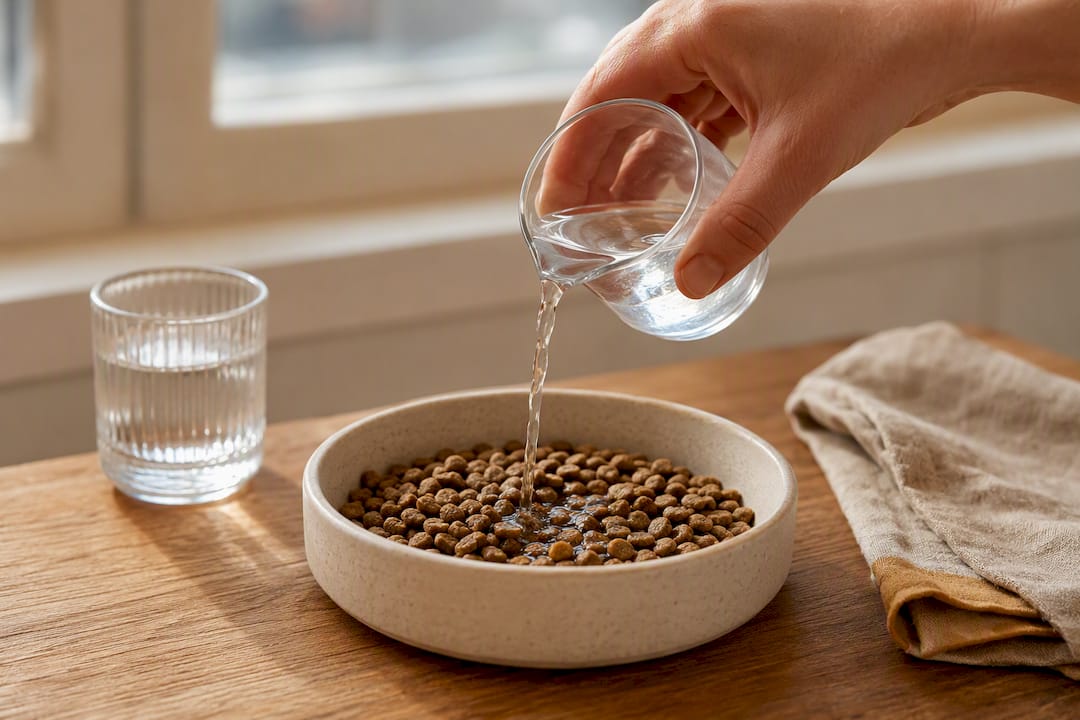
Pro Tip: A gradual, small-step transition matters more for Sphynx than for many other breeds, since their GI tract tends to react faster and more visibly to abrupt changes than a typical shorthair's does.
What New Sphynx Owners Typically Receive at Handover
Every kitten that leaves a reputable breeder arrives health checked, vaccinated, and with a feeding history already documented, so you're never starting from zero on day one. That handover often includes portion guidance and sample feeding schedules matched to the kitten's current age and weight, plus notes on socialization so the transition into your home feels natural rather than stressful.
New owners consistently mention how much smoother the first few weeks go when they're not guessing about meal timing or portion sizes, a pattern reflected in customer feedback from families who've brought kittens home through the program. Feeding history handed over at pickup means your vet can have real data to work from immediately, not a blank slate.
Sample Daily Routine and Common Pitfalls
For a typical 4 to 8 pound adult, a workable day looks like two measured wet meals, roughly 3 to 4 ounces each depending on calorie needs, with a small freeze-dried topper added to one meal for variety and rehydrated with warm water. Fresh water sits in two spots, and one is a fountain, since Sphynx cats often prefer moving water.
The most common mistake I see owners make is leaning on dry kibble because it's convenient, then wondering why hydration and skin issues creep in months later. The fix isn't complicated. Shift the ratio toward wet food and treat kibble as a minor supplement, not a base. Work with your vet and your breeder to fine-tune portions as your specific cat's activity level and body condition become clear.
— Amanou
Getting Feeding Support From the Start With a Reputable Breeder
A reputable breeder gives new owners a real head start on nutrition, not just a kitten and a goodbye. Every kitten typically leaves with a documented feeding history, current vaccination records, and a health check already completed, so you walk into your first vet visit with answers instead of questions.
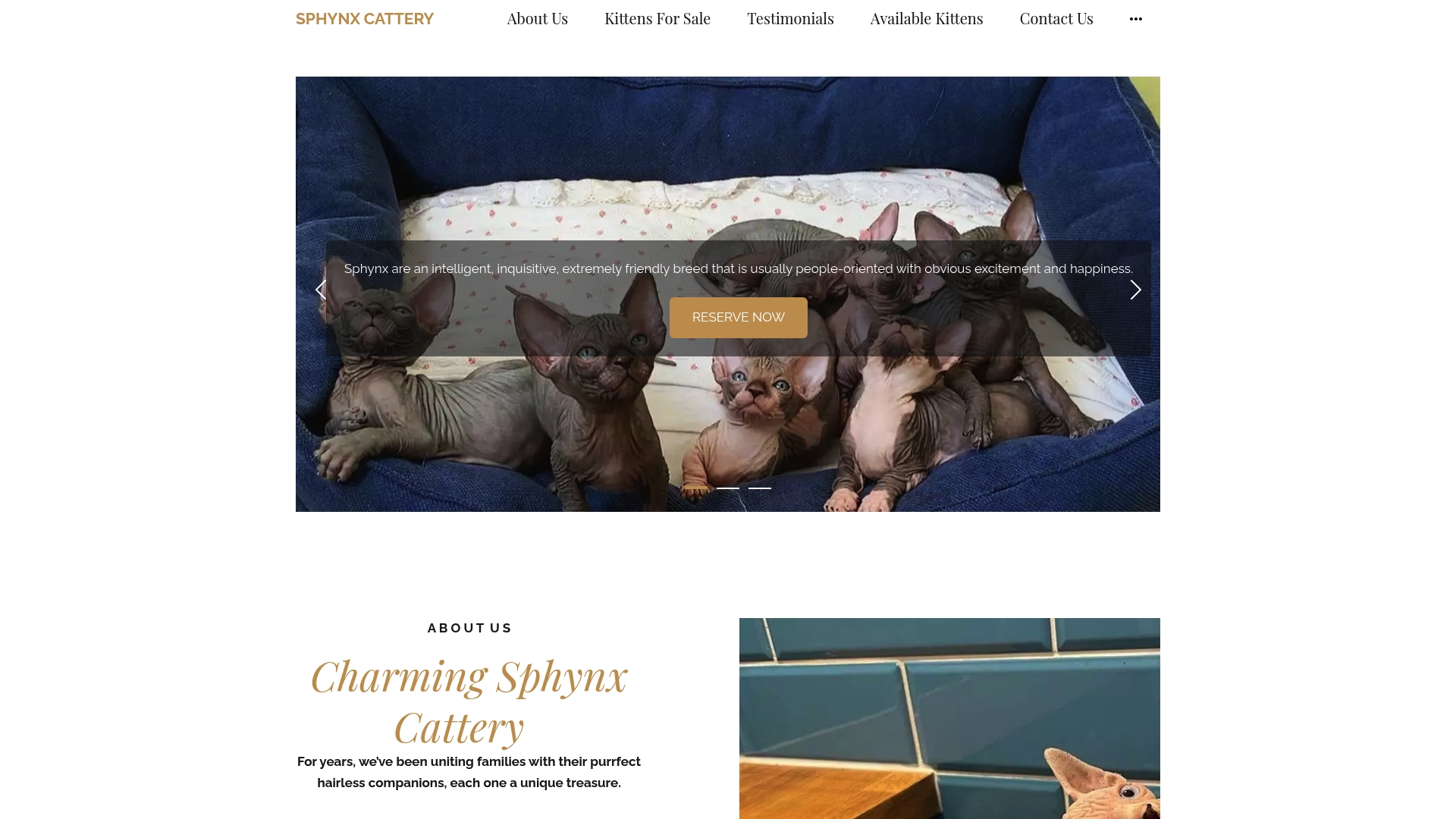
That head start matters more than it sounds. A feeding plan built on guesswork wastes weeks of trial and error, while one built on a kitten's actual feeding history lets you and your vet fine-tune portions and protein targets almost immediately. Such handovers can be paired with lifetime support for owners, so questions about diet transitions or portion adjustments don't go unanswered six months down the road.
If you're ready to bring a kitten home, browse available Sphynx kittens to see current litters, or reach out directly through the contact page to ask about feeding schedules, health records, and pickup or shipping options before you commit.
Sources
- Impact of dietary protein on cat health and wellbeing — ResearchOutreach (2023)
- Sphynx feeding guide: protein requirements and urinary tract safety plans — Dr. Zubair Khalid
Made with BabyLoveGrowth to reach more people through search