

The safe routine is simple: use a vet-recommended cleaner that is alcohol- and peroxide-free, apply it to the outer visible ear only, massage the base gently, let your cat shake, then wipe away visible loosened debris. Products like EPIOTIC, pH•notix, and Micellar Otic Cleanser are all built for this exact job. If you notice a strong odor, redness, pain, or discharge, stop cleaning and call your vet.
TL;DR:
- Sphynx cats typically produce more ear wax because they lack inner-ear hair, making buildup more visible yet prone to overcleaning.
- Normal wax is dark brown, dry or slightly tacky, with little to no smell, while concerning symptoms include discharge, odor, redness, swelling, or pain.
- The best cleaning method involves gentle application of vet-recommended, alcohol- and peroxide-free cleaners, followed by careful wiping and positive reinforcement.
- Cleaning should be done weekly for most Sphynx cats, but the frequency depends on individual buildup, and signs like foul odor or irritation signal when to consult a vet.
- Cotton swabs are dangerous and should be avoided at all costs; instead, use gauze or cotton balls to clean only the visible outer ear.
Table of Contents
- What That Dark Brown Gunk in Sphynx Ears Actually Is
- How Do You Safely Clean a Sphynx Cat's Ears?
- Which Ear Cleaner Is Best for a Sphynx?
- How Often Should You Clean Sphynx Ears?
- What Mistakes Do Sphynx Owners Make With Ear Cleaning?
- Charming Sphynx: How We Support New Owners Through Ear Care
- Where This Guidance Comes From
- Sources
What That Dark Brown Gunk in Sphynx Ears Actually Is
That waxy buildup you see is a natural mix of cerumen (ear wax), sebum (skin oil), and everyday debris like dust and dander. Healthy buildup usually looks thick, slightly dry, and dark brown, without an unpleasant smell attached to it.
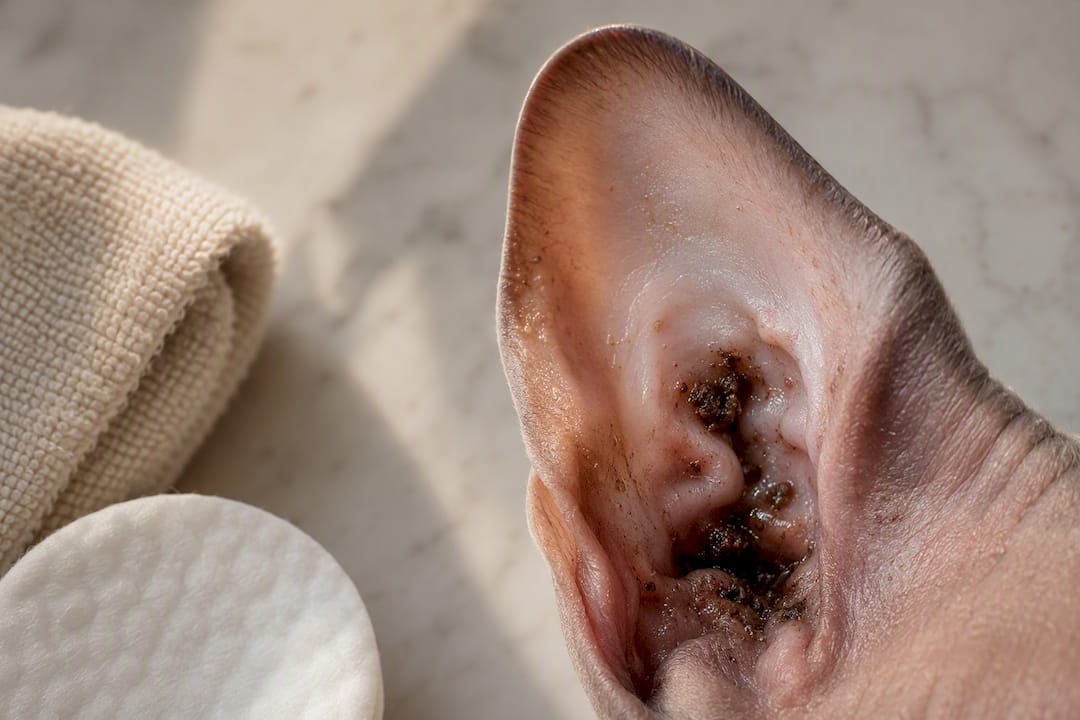
Sphynx cats produce more of it than furred breeds for a straightforward reason: they have no inner-ear hair to wick oils away from the canal, so everything just collects at the surface where you can see it. Their open, exposed ear structure also makes the buildup more visible and more tempting to overclean, which is its own mistake.
Here's how to tell normal wax from a problem brewing underneath it:
- Normal: dark brown, dry to slightly tacky, mild or no smell, cat seems unbothered.
- Concerning: yellow, green, or bloody discharge; sour or yeasty odor; heat or swelling around the ear; frequent head shaking or scratching.
How Do You Safely Clean a Sphynx Cat's Ears?
This is the heart of sphynx ear cleaning, and it rewards patience over speed. Rushing a nervous cat through this process is how owners end up with a scratched arm and a cat who hides at the sight of the cleaner bottle next time.
Supplies to gather first:
- A vet-recommended, alcohol- and peroxide-free ear cleaner
- Cotton balls or gauze pads (never cotton swabs)
- A soft towel
- Treats for positive reinforcement
- A second pair of hands if your cat is wriggly
The step-by-step routine:
- Inspect first. Look and sniff before you touch anything. If something seems off, skip straight to calling your vet.
- Apply the cleaner. Follow the product's directions. Some are designed to be squeezed directly into the canal opening; others work best applied to a cotton ball first.
- Massage the base of the ear for about 60 seconds. You'll hear a soft squelching sound. That means the cleaner is loosening debris the way it's supposed to.
- Let your cat shake. This brings loosened wax up and out where you can reach it. Do not skip this step by wiping too early.
- Wipe the visible debris from the outer ear and canal entrance using a cotton ball or gauze. Never chase debris deeper.
- Dry gently and reward. A treat now builds a positive association for next time.
Short sessions work better than one long, stressful cleaning. Wrapping your cat snugly in a towel, burrito-style, keeps paws contained and makes the whole thing feel calmer for both of you. If your cat is fighting hard, has one visibly painful ear, or the debris looks nothing like the dry brown wax you're used to, stop and get your vet involved instead of pushing through.
Pro Tip: Clean both ears even if only one looks dirty. Comparing left to right helps you spot subtle changes early, before they turn into a real infection.
Which Ear Cleaner Is Best for a Sphynx?
Not every bottle labeled "ear cleaner" belongs anywhere near a Sphynx's sensitive skin. Look for cleaners that are alcohol-free, peroxide-free, pH-balanced, and formulated specifically for cats rather than repurposed human products. Ceruminolytic or micellar formulas are worth prioritizing because they break down wax chemically instead of relying on friction, which matters when the skin underneath has no fur buffer.
A few options come up again and again in veterinary recommendations:
- EPIOTIC (Virbac): A veterinarian-recommended cleanser built for routine cleansing, gentle enough for frequent use without irritating the ear lining.
- pH•notix (Vetoquinol): A pH-balanced, one-step formula that emulsifies wax and moisturizes the canal without needing a rinse.
- Micellar Otic Cleanser: Uses micellar technology with phytosphingosine salicyloyl to lift wax while supporting the skin barrier rather than drying it out.
If your Sphynx has a history of skin sensitivity or a recurring ear problem, talk to your vet before switching products. What works fine for one cat's ears can sting or irritate another's, and chronic issues sometimes need a medicated formula rather than a general cleanser.
How Often Should You Clean Sphynx Ears?
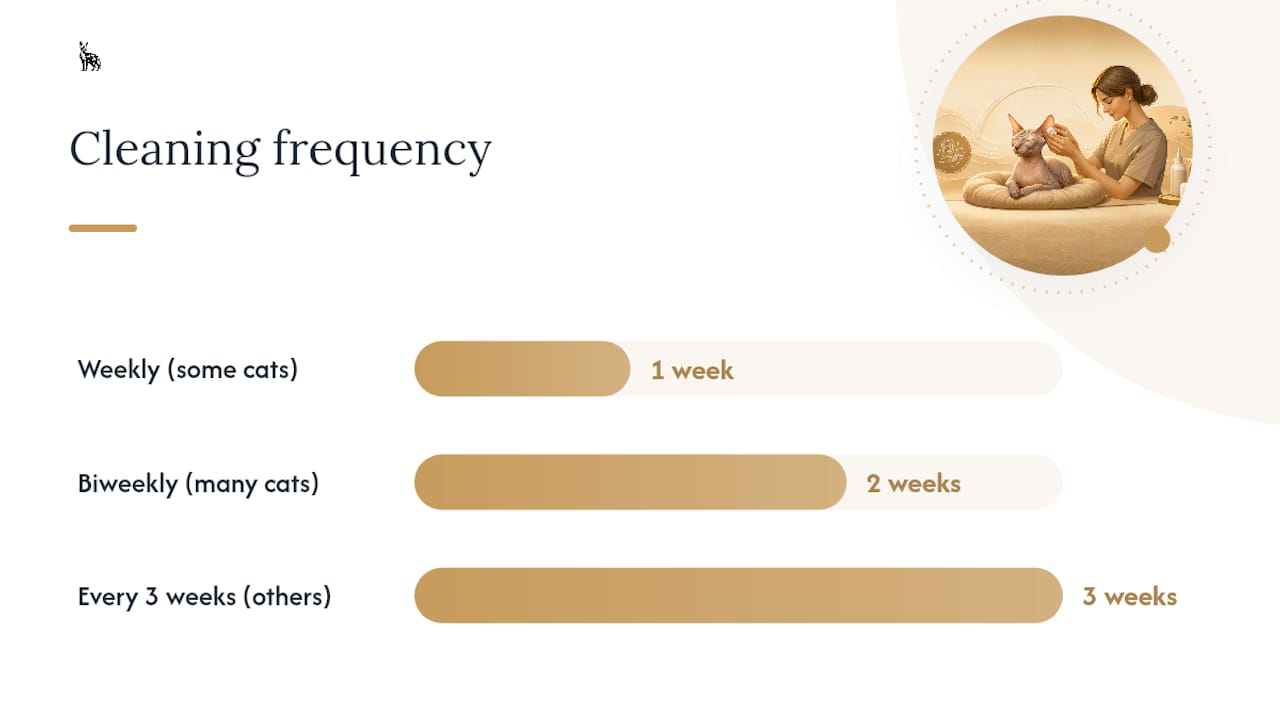
A quick weekly check is the baseline for every Sphynx owner. Many Sphynx do need cleaning weekly to biweekly given how much wax they tend to accumulate, but the right frequency really depends on your individual cat. Some need it every week. Others go two or three weeks between sessions without any buildup worth addressing.
Watch for these signs that mean it's time to call your vet rather than reach for the cleaner bottle:
- Sour, sharp, or yeasty odor
- Redness, swelling, or visible pain when touched
- Pus or unusual discharge color
- Persistent head shaking or ear scratching between cleanings
Keeping a simple note on your phone (date cleaned, what the wax looked like) makes patterns obvious fast. If buildup that used to be mild and manageable suddenly turns heavy or smelly, that shift is the signal to escalate, not the absolute amount of wax on any single day.
What Mistakes Do Sphynx Owners Make With Ear Cleaning?
The single biggest error is reaching for a cotton swab. Q-tips push debris deeper into the canal instead of removing it, and they carry real risk of eardrum damage. Stick to gauze or a cotton ball on the visible outer ear only.
A few more habits to drop:
- Skip alcohol, hydrogen peroxide, and human acne treatments. They dry out and irritate delicate Sphynx skin.
- Don't clean daily "just to be safe." Vets emphasize maintaining healthy ears, not chasing an artificially spotless canal, and over-cleaning irritates tissue more than mild buildup ever does.
- Avoid unproven home remedies like tea tree oil, which can be toxic to cats even in small amounts.
Charming Sphynx: How We Support New Owners Through Ear Care
Routine ear care, including the massage-and-wipe method, is demonstrated to new owners before their kitten goes home to help make the process feel familiar and less intimidating. Each kitten is provided with written care guidance, and support continues beyond pickup. New owners are encouraged to reach out for help if questions arise after the initial care period. Read what other new owners say about that ongoing support on our customer testimonials page, and never hesitate to loop in your own veterinarian for anything specific to your cat.
If you're still searching for your future companion, browse our current Sphynx kittens available across the country to see who's ready for a home like yours.
— Amanou
Where This Guidance Comes From
The steps and safety warnings above draw directly from veterinary sources, not guesswork.
- VCA Animal Hospitals: ear cleaning and medication instructions for cats
- PetMD: Sphynx breed ear care guidance
- Virbac EPIOTIC Advanced Ear Cleanser product page
- Vetoquinol pH•notix Enhanced Ear Cleaner product page
- DailyMed Micellar Otic Cleanser entry
For anything moderate to severe, your veterinarian is always the right next call.
Sources
- Ear Cleaning and Administering Ear Medication in Cats | VCA Animal Hospitals
- MICELLAR OTIC CLEANSER — DailyMed